
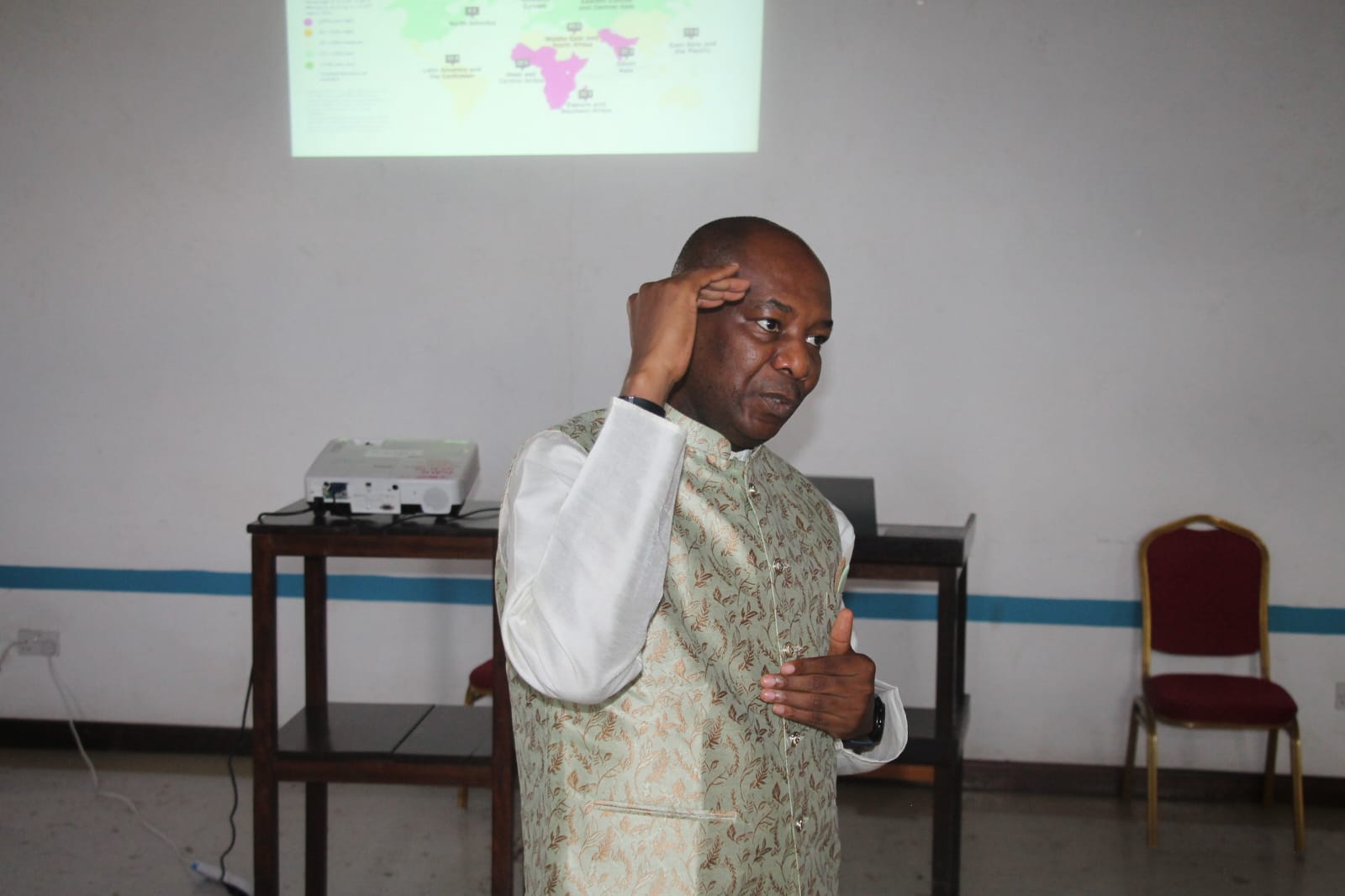
Dr. Ismael Teta in his address for the Nutrition situation in East Africa and Kenya at the Faculty of Health Sciences.
The health threat of malnutrition and wasting, particularly among children, demands immediate and stringent preventative measures, according to a leading nutrition expert.
Dr. Ismael Teta, Head of Nutrition for United Nations Children's Fund (UNICEF), emphasized the need for interventions to combat these serious health challenges during a lecture addressing the Nutrition situation in East Africa and Kenya that he gave at the Faculty of Health Sciences courtesy of the Department of Public and Global Health on the 24th April 2026.
According to the global malnutrition scale of 2024, Sub-Saharan Africa and Asia lead in prevalence of malnutrition globally.
Kenya, in particular, faces alarmingly high rates of malnutrition. Dr. Teta issued a powerful call for a comprehensive, multi-sectoral transformation to effectively prevent malnutrition and reduce its incidence.
This can be realized through policy imperative through positioning child food poverty as a national development goal and policy priority.
Dr. Teta noted that a staggering 63% of Kenyan children are currently affected by this issue which UNICEF defines a s a child’s inability to access and consume nutritious and diverse foods.
To achieve this goal, Dr. Teta outlined several key imperatives: transforming and leveraging food systems, implementing robust social protection measures, and strengthening data collection and analysis.
The goal to prevent and treat malnutrition however is not without obstacles. Chronic underfunding of the nutrition sector, recurrent emergencies such as climate crises and conflicts, insufficient resource diversification, fragile food systems, persistent equity gaps at the county level, and significant data deficiencies pose substantial barriers.
Despite these challenges, Dr. Teta acknowledged Kenya's commendable progress, citing existing government policies, strategies, and guidelines. Frameworks like the Kenya National Nutrition Action Plan (KNAP 2023), which benefits from the contributions of Dr. Jane Muita from the University of Nairobi, FHS Department of Public and Global Health are already in place to drive improvements.
Kenya is also on course to meet four of the 15 World Health Organization (WHO) Global nutrition targets. These are reducing prevalence and preventing childhood wasting, childhood stunting, childhood overweight and achieving exclusive breastfeeding.
The lecture served as a platform to engage future medical professionals, bringing together Master of Public Health and MBCHB Level 5 students, alongside Dr. Rose O. Opiyo, Chair of the Department of Public and Global Health.
- Log in to post comments


